You can start your remote career right from home if you know how to apply effectively.
Many companies now offer work-from-home opportunities across different roles and skill levels.
This guide shows you the essential steps to find, apply, and get hired for a job that fits your lifestyle.
Understanding Work-From-Home Jobs
You need to understand what work-from-home jobs are before applying.
These roles vary depending on skills, industries, and setup requirements. Here are the key points to know:
- Definition: Work-from-home jobs let you perform all your duties remotely using a computer and an internet connection.
- Job Types: Common fields include customer service, IT support, digital marketing, writing, and education.
- Employment Options: You can work as a full-time employee, freelancer, or independent contractor.
- Flexibility: Many roles let you set your own hours or work across time zones.
- Pay Structure: Some jobs pay hourly, others are project-based or fixed monthly rates.
- Work Setup: You’ll need a quiet workspace, a reliable internet connection, and communication tools like Zoom or Slack.
Basic Requirements for Remote Jobs
Before applying, make sure you meet the basic requirements for remote jobs.
Employers look for both technical readiness and personal discipline. Here are the essentials you’ll need:
- Reliable Computer: A laptop or desktop capable of handling video calls, multitasking, and online tools.
- Stable Internet Connection: A high-speed, consistent connection to ensure smooth communication and workflow.
- Quiet Workspace: A distraction-free area that allows you to focus during meetings and tasks.
- Communication Tools: Access to apps like Zoom, Slack, Google Meet, or Microsoft Teams for daily collaboration.
- Time Management Skills: The ability to stay organized and meet deadlines without direct supervision.
- Self-Discipline: Motivation to stay productive and manage your workload independently.
How to Find Legitimate Opportunities
It’s important to find legitimate work-from-home opportunities to avoid scams and wasted effort. Focus only on trusted sources and verified companies.
Here’s how you can do it:
- Use Reputable Job Sites: Search on platforms like LinkedIn, Indeed, Remote.co, and FlexJobs that list verified remote roles.
- Check Company Websites: Visit the official “Careers” page of companies offering remote work.
- Verify Job Posts: Confirm that the listing includes company contact details, a professional domain, and a clear job description.
- Avoid Red Flags: Stay away from offers that ask for upfront fees, personal bank details, or guaranteed income.
- Join Remote Work Communities: Participate in online groups or forums where people share real job leads and employer feedback.
- Set Job Alerts: Enable notifications for new remote openings in your field to apply early.
How to Apply for Work-From-Home Opportunities
Once you’ve found legitimate listings, it’s time to apply for work-from-home opportunities correctly.
A well-prepared application increases your chances of being noticed quickly. Follow these key steps:
- Read Carefully: Review the job description, role requirements, and instructions before sending anything.
- Prepare a Tailored Resume: Highlight your remote work skills, such as communication and self-management.
- Write a Focused Cover Letter: Keep it short, showing why you’re a good fit and how you can add value.
- Submit Required Materials: Attach your resume, portfolio, or any assessments exactly as instructed.
- Use Professional Communication: Provide a clear email address and a polite tone.
- Follow Up: If you don’t hear back after a week or two, send a short, respectful follow-up message to check the status of your application.
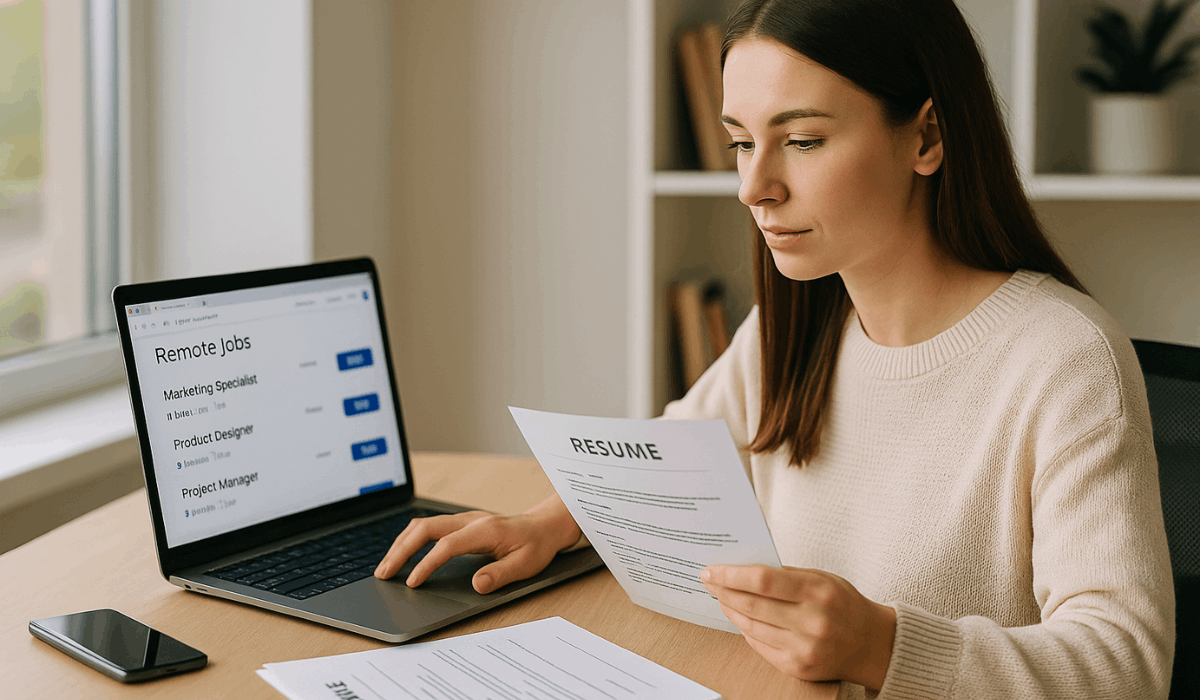
Preparing Your Resume and Online Profile
Your resume and online profile play a significant role in getting hired for remote jobs.
They should clearly show that you can work independently and communicate effectively online. Here’s how to prepare them:
- Highlight Remote Skills: Emphasize abilities like self-discipline, digital collaboration, and time management.
- Show Experience with Tools: Mention your familiarity with apps such as Zoom, Trello, Slack, or Google Workspace.
- Use Clear Formatting: Keep your resume clean, organized, and easy to scan.
- Update Your LinkedIn Profile: Add your latest roles, achievements, and a professional profile photo.
- Include Results: Use measurable achievements (e.g., “Improved online response rate by 25%”).
- Add Certifications: List any online courses or remote work training you’ve completed to boost credibility.

Succeeding in Online Interviews
Preparing for online interviews is crucial to standing out among remote job applicants.
You need to show confidence, professionalism, and readiness for remote work. Follow these simple steps to succeed:
- Test Your Setup: Check your internet, camera, and microphone before the interview.
- Choose a Quiet Space: Find a clean, distraction-free area with good lighting and minimal background noise.
- Dress Professionally: Wear appropriate clothing even if the interview is virtual.
- Be on Time: Join the meeting a few minutes early to show up on time.
- Maintain Eye Contact: Look directly at the camera when speaking to create a natural connection.
- Answer Clearly and Confidently: Keep responses short, focused, and relevant to the role.
- Prepare Questions: Have a few thoughtful questions ready to show interest and initiative.
Building Long-Term Remote Work Skills
Developing long-term remote work skills helps you stay competitive and advance your career.
Continuous learning and adaptability are key to thriving in a remote setup. Here are essential skills to build:
- Digital Communication: Improve how you write and speak clearly through chat and video platforms.
- Time Management: Learn to prioritize tasks using tools like Trello, Asana, or Google Calendar.
- Self-Motivation: Practice staying productive without supervision or constant feedback.
- Tech Proficiency: Stay updated with new apps, software, and automation tools for remote teams.
- Problem-Solving: Strengthen your ability to handle issues independently and find quick solutions.
- Collaboration: Participate actively in online meetings and teamwork using shared documents and chat channels.
- Continuous Learning: Take short online courses to expand your skills and stay relevant in your field
Advancing Your Remote Career
Once you’re comfortable working remotely, focus on advancing your remote career.
Growth comes from consistency, networking, and learning new skills that set you apart. Here’s how to move forward:
- Set Career Goals: Define where you want to be in one or two years and plan the steps to get there.
- Ask for Feedback: Request regular performance reviews to identify areas for improvement.
- Expand Your Skills: Take advanced courses or earn certifications related to your role.
- Network Online: Join professional groups on LinkedIn, Slack, or industry-specific forums.
- Show Initiative: Volunteer for new projects or leadership tasks within your remote team.
- Build a Portfolio: Track completed projects or measurable results to showcase future opportunities.
- Stay Consistent: Maintain professionalism, reliability, and quality in every task to earn long-term trust.
Salary and Benefits Overview for Remote Jobs
Before applying, it helps to understand the salary and benefits of most work-from-home jobs.
Pay and perks can vary depending on your role, experience, and employer. Here’s a general breakdown:
Salary Overview
- Entry-Level Roles: Positions like data entry or customer support usually pay US $12–$20 per hour.
- Mid-Level Roles: Jobs in marketing, design, or administration can range from US $25–$40 per hour.
- Specialized Roles: Technical or management positions may earn US $50–$80 per hour or more.
- Freelance Contracts: Payment is often project-based, with flexible rates negotiated per task or deliverable.
Benefits
- Flexible Schedule: Set your working hours to fit your personal commitments.
- No Commute: Save time and transportation costs by working from home.
- Health Coverage: Some full-time remote roles include insurance or wellness programs.
- Equipment Allowance: Certain companies offer stipends for computers or internet upgrades.
- Paid Leave and Bonuses: Many employers still provide paid vacation and annual incentives.
- Career Growth: Continuous opportunities for training, certification, and advancement in remote-friendly industries.
Final Takeaway
Getting a remote job starts with preparation and confidence.
When you know how to search, apply, and present your skills effectively, your chances of landing the right opportunity increase.
Start applying today for verified work-from-home positions and take the next step toward a flexible and rewarding career.